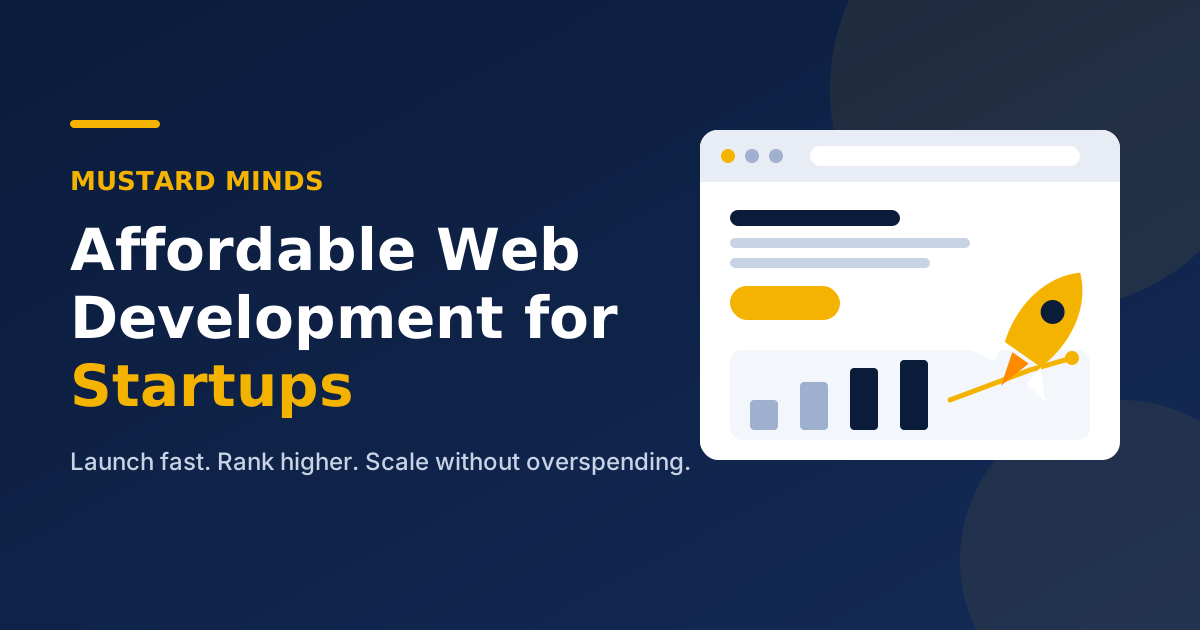
Every startup founder faces the same tension: you need a professional website to earn trust, capture leads and support growth, but every rupee counts. The good news is that affordable web development services for startups don’t have to mean cheap, slow or unscalable. They mean spending smartly.
In this guide, we break down what a startup website should actually cost, where to save, where never to cut corners, and how to choose a development partner who builds for growth.
Why Your Startup Website Is Your Most Important Early Asset
Before you have a big team, a brand name or a large customer base, your website is doing the heavy lifting. It is:
- Your first impression: Investors, customers and hires will Google you before they call you.
- Your sales channel: A well-structured site converts traffic from search, social and ads into leads.
- Your credibility signal: A fast, secure and well-designed site tells visitors you’re serious.
- Your SEO foundation: Organic search is often the cheapest long-term acquisition channel a startup has.
Getting the foundation right matters more than adding features. That is the core principle behind affordable, high-impact web development.
What Does Affordable Web Development Actually Mean?
“Affordable” is not the same as “cheapest.” A ₹10,000 template site that loads in eight seconds, isn’t mobile-friendly and can’t be edited will cost you far more in lost leads and rebuild costs.
True affordability means:
- Right-sized scope: Building what you need now, with room to expand later.
- Smart technology choices: Using proven platforms instead of reinventing everything.
- Low total cost of ownership: Fewer maintenance headaches, fewer surprise bills.
- Built-in SEO and performance: So you don’t pay again to fix it after launch.
How Much Does a Startup Website Cost in India?
Costs vary by scope, features and team. As a general guide for the Indian market (indicative ranges, not fixed quotes):
| Website Type | Best For | Typical Range (INR) |
|---|---|---|
| Landing page | Validating an idea, running ads | ₹15,000 – ₹50,000 |
| Business website (5–10 pages, WordPress) | Service startups, early-stage brands | ₹40,000 – ₹1,50,000 |
| Content + SEO-ready website with blog | Startups relying on organic growth | ₹80,000 – ₹2,50,000 |
| E-commerce store | D2C and product startups | ₹1,00,000 – ₹4,00,000 |
| Custom web application / MVP | SaaS and platform startups | ₹2,50,000 and above |
Your final cost depends on design complexity, integrations (payments, CRM, APIs), content volume and ongoing support.
7 Smart Ways to Get Affordable Web Development Without Compromising Quality
1. Start with an MVP website, not a “perfect” one
Launch with the pages that drive decisions: Home, Services or Product, About, Contact and one strong landing page. Add case studies, blogs and advanced features as you grow. This approach reduces upfront cost and speeds up time-to-market.
2. Choose WordPress or a headless CMS for flexibility
For most startups, WordPress with a clean Gutenberg-based build delivers the best balance of cost, speed and control. Your team can update content without developer help, and the ecosystem of plugins and integrations is huge. When you need more performance or a custom front end, a headless WordPress setup lets you scale without a rebuild.
3. Use a reusable design system
A consistent set of colors, typography, buttons and layouts means every new page is faster and cheaper to build, and your brand looks polished from day one.
4. Build SEO in from day one
Retrofitting SEO is expensive. Make sure your developer handles:
- Clean, semantic HTML and a logical heading structure
- Fast load times and strong Core Web Vitals
- Mobile-first, responsive design
- XML sitemap, robots.txt and canonical tags
- Schema markup (Organization, FAQ, Article)
- SEO-friendly URLs and internal linking
5. Prioritize performance and security
Speed affects both rankings and conversions. Image compression, caching, lightweight code and a good hosting setup cost little at the start and pay off for years. Add basic security hardening (SSL, backups, updates, limited plugin use) to protect your reputation.
6. Integrate only what you need
Every integration adds cost. Start with essentials such as a lead form, analytics, a CRM connection and a payment gateway if needed. Add automation and AI features once you have real usage data.
7. Pick a partner who thinks like a startup
The right agency understands runway, iteration and growth. Look for teams that offer fixed-scope pricing, phased delivery and transparent communication.
Where You Should Never Cut Corners
Saving money is smart. These areas are not the place to do it:
- Site speed and mobile experience: Most Indian users browse on mobile. A slow site loses them in seconds.
- Security and backups: One breach can cost more than the entire build.
- Clean code and structure: Messy code makes every future change slower and more expensive.
- Accessibility: ADA/WCAG-friendly design widens your audience and reduces legal risk.
- Content ownership: You should own your code, design files, domain and hosting access.
Custom Development vs Templates vs No-Code: What Suits a Startup?
| Option | Pros | Cons | Best For |
|---|---|---|---|
| Templates / no-code | Lowest upfront cost, quick launch | Limited customization, performance and SEO constraints | Idea validation, very early stage |
| WordPress (professionally built) | Affordable, scalable, SEO-friendly, easy to manage | Needs good development for speed and security | Most startups and service businesses |
| Custom / headless build | Maximum performance and flexibility | Higher initial investment | SaaS, platforms, funded startups |
For most early-stage companies, a professionally built WordPress site is the sweet spot between cost and capability.
A Practical Launch Roadmap for Startups
- Discovery (Week 1): Define goals, audience, competitors and must-have pages.
- Design (Weeks 1–2): Wireframes and a brand-aligned UI that reflects your identity.
- Development (Weeks 2–4): Responsive build, CMS setup, integrations and on-page SEO.
- Testing (Week 4): Speed, mobile, cross-browser, accessibility and security checks.
- Launch and measure (Week 5): Go live, connect Google Analytics and Search Console, and track conversions.
- Iterate: Improve based on real user data, add content and expand features.
Timelines vary by scope, but a focused startup site can often go live in four to six weeks.
Questions to Ask Before Hiring a Web Development Company
- Can you show similar startup projects and results?
- What is included in the price, and what costs extra?
- Will the site be SEO-ready and fast at launch?
- Who owns the code and design after delivery?
- What post-launch support and maintenance do you offer?
- How do you handle scope changes?
Clear answers to these questions separate reliable partners from risky ones.
Ready to Build a Startup Website That Grows With You?
At Mustard Minds, we build fast, SEO-ready and scalable websites designed around startup budgets and growth goals, from lean MVP sites to AI-first web solutions.
Tell us about your startup and get a clear, no-obligation plan within 24 hours.
Frequently Asked Questions
Final Thoughts
Affordable web development for startups is about clarity, not compromise. Define what you need now, build it on a solid and scalable foundation, bake in SEO and performance from day one, and grow from real data.
Startups that treat their website as a growth asset, not a one-time expense, get the most from every rupee.
Have a startup idea or an outdated website? Talk to the Mustard Minds team and let’s build something that performs.
Related Blogs
- Affordable Web Development Services for Startups: How to Launch Fast Without Burning Your Runway

- WordPress vs DNN (DotNetNuke): Which CMS Should You Choose in 2026?
- 10 Signs Your Website Is Hurting Your Business\ (And How to Fix It)

- WordPress vs Custom Development: Which Is Right for Your Business in India?
- website cost india 2026

- Is Your Website Ready for 2026? The AI-Powered Web Revolution Is Already Here