Can’t I Just Ask AI to Build My Website?
You have probably seen the videos. Someone types one sentence into an AI tool, and a full website appears in seconds. It looks great. It feels like magic.
So a question is spreading fast among business owners: “If AI can build a website in a minute, why should I pay a web development company?”
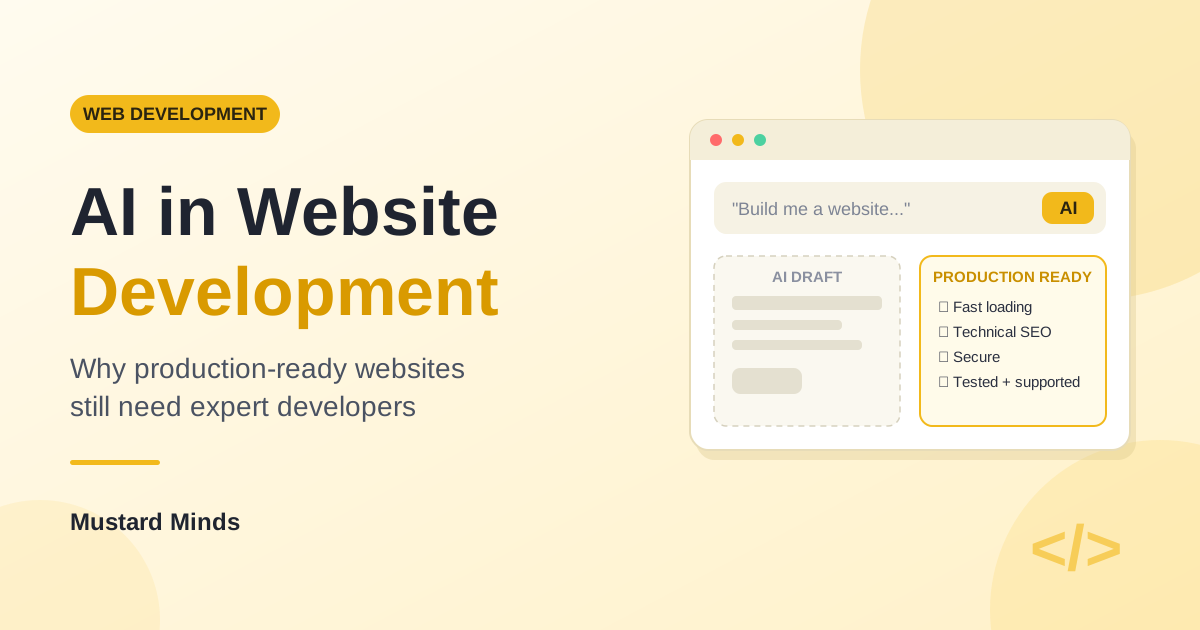
Here is the honest answer. AI is a powerful helper, and it has changed website development for good. But a production-ready website is not the same as a good-looking demo. A demo only needs to look right. A real business website must load fast, rank on Google, stay secure, work on every device, collect leads, and keep running for years.
This guide explains, in simple words, how AI is changing web development, what it can and cannot do, and where an expert developer is still needed. It is useful whether you are a business owner, a marketer, a startup founder, or a developer yourself.
Market Snapshot: What the Data Says
Numbers help separate hype from reality. Here is what recent industry reports show (figures are approximate and change every year, so always check the latest versions of these sources):
- AI use by developers is mainstream. The Stack Overflow Developer Survey 2024 found that roughly three out of four developers were using or planning to use AI coding tools.
- Trust is lower than usage. The same survey showed that fewer than half of developers fully trusted the accuracy of AI output. People use it, but they double-check it.
- Speed gains are real. GitHub’s research on its Copilot tool reported that developers finished a sample coding task about 55% faster with AI help.
- Security is a concern. Security research, including reports from companies like Veracode, has found that a large share of AI-generated code samples (around 40-45% in some tests) contained security weaknesses.
- Websites are still huge business. Over a billion websites exist worldwide, and only a fraction are actively maintained. New and rebuilt sites are needed every year in every country.
- WordPress still leads. According to W3Techs, WordPress powers around 43% of all websites and holds well over 60% of the CMS (content management system) market.
- Google’s position is clear. Google says it rewards helpful, people-first content, no matter how it is made, but it treats mass-produced, low-value pages as spam.
What this tells us: AI adoption is high, but experts are still reviewing, fixing, and guiding the output. The tool is changing. The need for skill is not going away.
How AI Is Changing Website Development
AI has touched almost every stage of building a website.
Planning and research AI can suggest site structure, page ideas, and competitor angles in minutes.
Design Tools can turn a text idea into a rough layout, color palette, or mockup. This makes early discussions with clients faster.
Coding AI assistants can write basic code, suggest fixes, and explain errors. Developers use them like a very fast intern: helpful, but needs supervision.
Content AI can produce first drafts of page text, product descriptions, and meta tags.
Testing and support AI can help spot bugs, write test cases, and power website chatbots.
The biggest change is speed. What took days can now take hours. The mistake is believing that speed equals completeness.
What AI Does Well
Being fair matters. AI is genuinely good at these jobs:
- Creating quick prototypes and first-look designs
- Writing simple code snippets and repetitive code
- Drafting page copy and blog outlines
- Suggesting keywords and meta descriptions
- Resizing and describing images (alt text drafts)
- Translating content into other languages
- Explaining technical problems in plain language
For a personal portfolio, a simple one-page event site, or an early idea test, an AI builder can be enough.
Real Challenges That Need Expert Developer Intervention
This is the part that rarely appears in the viral demos. A website that earns money has to pass many tests that a prompt cannot cover.
Performance and Core Web Vitals
Google measures how fast your page loads and how stable it feels. AI-generated pages often carry heavy code, large images, and extra scripts. An expert compresses assets, cleans code, sets up caching, and uses a CDN so the site stays fast for users in Delhi, Dubai, or New York alike.
Technical SEO
Good rankings need more than nice text. They need clean URL structure, correct heading order, schema markup, XML sitemaps, canonical tags, redirects, and proper indexing rules. AI tools often skip or misconfigure these. One wrong setting can hide your whole site from Google. (Learn more about our SEO services.)
Security
A live website faces constant attacks: bots, spam, malware, and login attempts. Production sites need secure code, safe form handling, updated plugins, firewalls, SSL, backups, and user-role control. AI code may include outdated or unsafe patterns, and it will not warn you.
Custom Features and Integrations
Payment gateways, CRM tools, booking systems, ERP links, WhatsApp, and email automation need careful setup. Each has its own rules, test modes, and failure cases. AI can write a draft, but someone must connect, test, and debug it with real data.
Accessibility and Legal Compliance
Websites must work for people using screen readers or keyboards. Rules like WCAG, GDPR (Europe), CCPA (California), and India’s DPDP Act affect cookie banners, forms, and data storage. These are legal and human issues, not just design choices.
Cross-Device and Cross-Browser Testing
A page that looks perfect in one browser may break in another. Real testing on real phones, tablets, and browsers is still hands-on work.
Scalability and Hosting
What happens when traffic jumps 10 times after an ad campaign? Server setup, database tuning, and hosting choice decide whether your site survives or crashes.
Brand Identity and Conversion Strategy
AI copies patterns. It does not know your customers, your pricing, or what makes them trust you. A good website is built around business goals: more calls, more sales, more form fills. That needs strategy, not only layout. See how our website development services connect design with results.
Maintenance and Long-Term Ownership
Websites need updates, backups, bug fixes, and monitoring every month. When something breaks at 2 a.m., a chatbot will not log into your server. A team will.
Accuracy and “Confident Mistakes”
AI can produce code or text that looks right but is wrong. Without an expert to review it, small errors reach live users and cost trust and money.
AI Website Builder vs. Professional Developer
| Factor | AI Website Builder | Professional Developer / Agency |
|---|---|---|
| Speed to first draft | Very fast | Fast to moderate |
| Cost at the start | Low | Higher |
| Custom design and brand fit | Limited | Fully tailored |
| Technical SEO | Basic or missing | Built in and tested |
| Site speed optimization | Often average | Optimized for Core Web Vitals |
| Security hardening | Minimal | Planned and monitored |
| Complex integrations | Risky | Tested and supported |
| Ongoing support | Usually none | Available |
| Best for | Simple or test projects | Business, e-commerce, lead generation |
Simple rule: The more your income depends on your website, the less you should leave it to a single prompt.
Pros and Cons of Using AI in Website Development
Pros
Cons
The balanced view: AI is a great assistant. It is a poor owner of your website.
A Quick Glimpse: Why WordPress Is Still the Most Affordable Choice
If you want a professional website without a huge budget, the CMS you choose matters. Here is why many businesses stay with WordPress:
- Free core software. WordPress itself is open source. You pay for hosting, a domain, and expert setup, not for a software license.
- Huge plugin and theme library. Features like SEO tools, forms, bookings, and online stores are available without writing code from scratch.
- Large talent pool. Because so many developers know WordPress, hiring help is easier and usually cheaper than with niche platforms.
- You own your site. Unlike many closed builders, you can move hosts and keep your content and data.
- SEO friendly. Clean structure, editable URLs, and strong SEO plugins make ranking work easier.
- Scales with you. The same platform can run a small business site or a large online store.
In comparison, subscription-based site builders can look cheaper at first but often add monthly fees, limits, and extra charges as you grow. Custom-coded platforms give full control but usually cost much more to build and maintain.
AI works well with WordPress too. Developers use AI to speed up theme work, plugin setup, and content drafts, then test and secure the final site. Explore our WordPress development services for details.
The Future of AI in Website Development
What can we reasonably expect in the next few years?
1. Smarter design assistants. Tools will understand brand guidelines better and produce cleaner layouts.
2. More personalized websites. Pages may change content based on a visitor’s location, interests, or behavior.
3. Better automated testing. AI will find more bugs before launch, reducing human effort on routine checks.
4. Voice and conversational search. People will find businesses by asking AI assistants. Websites will need clear structure, schema, and trusted content to be recommended. This makes SEO and AI search optimization even more important.
5. Developers become reviewers and strategists. Less time on repetitive coding, more time on architecture, security, performance, and business logic.
6. Higher value on trust and originality. As AI-made sites flood the web, real expertise, real reviews, and real brand stories will stand out.
What will not change: Someone must be responsible for quality, safety, and results. That someone is a skilled human.
Pro Tips
How to Use AI the Smart Way in Your Website Project
Total Time Needed :
30
Minutes
Required Tools:
Define your goal. Decide what the website must do: generate leads, sell products, book appointments, or build trust.
Let AI help with research. Ask it for page ideas, competitor angles, and keyword suggestions. Verify everything with real tools.
Create a clear structure. Map your pages: Home, Services, About, Contact, Blog, and so on. Plan internal links between them.
Draft the design and content. Use AI for rough layouts and first-draft text. Share them with your developer as a starting point.
Let an expert build and optimize. A developer turns the draft into a fast, secure, SEO-ready site on a platform like WordPress.
Test everything. Check forms, payments, mobile view, speed, and browser behavior.
Launch and monitor. Submit your sitemap, track performance, and fix issues quickly.
Keep improving. Update content, add new pages, and review analytics every month.
Frequently Asked Questions
Conclusion: AI Is the Tool, Experts Are the Builders
AI has made website development faster, more creative, and more accessible. That is a good thing for everyone. But the idea that a professional website is ready after “just one prompt” is a myth. Real websites need speed, security, SEO, testing, strategy, and care over time.
The smartest businesses will not choose between AI and experts. They will use AI for speed and experts for quality, safety, and growth.
If you are planning a new website or wondering whether your AI-built site is ready for real customers, our team at Mustard Minds can help. We combine modern AI tools with expert website development, SEO, and digital media marketing to build websites that actually perform.
Ready to build a website that works for your business? Contact Mustard Minds for a free consultation.
Related Articles
- How AI Is Changing Website Development (And Why Production-Ready Websites Still Need Experts)

- Affordable Web Development Services for Startups: How to Launch Fast Without Burning Your Runway
- WordPress vs DNN (DotNetNuke): Which CMS Should You Choose in 2026?
- 10 Signs Your Website Is Hurting Your Business\ (And How to Fix It)

- WordPress vs Custom Development: Which Is Right for Your Business in India?
- website cost india 2026